
Declaration of non-infringement before the UPC
You want to launch a product, but a competitor’s patent raises questions? An action for a declaration of non-infringement creates clarity for all UPC states.
- Representation before all UPC divisions
- Attorneys-at-law and patent attorneys
- Reply usually within 24 hours
What it is about
With an action for a declaration of non-infringement (Art. 32(1)(b) UPCA, R. 60–69 RoP), a company obtains a court ruling that a specific product or process does not infringe a patent. The judgment creates legal certainty for all UPC states in which the patent is in force. It is particularly valuable before major investments, in tenders, or when customers have been unsettled by a warning letter.
Requirements
The claimant must first have asked the patent proprietor or exclusive licensee in writing to confirm that there is no infringement, providing all necessary information about the product. Only if this confirmation is refused or not given within one month is the action admissible (R. 61 RoP). We draft this request so that it reliably meets the requirement without unnecessarily disclosing trade secrets.
Jurisdiction and relationship to the infringement action
The action for a declaration of non-infringement is brought before the Central Division (Art. 33(4) UPCA). If the patent proprietor brings an infringement action between the same parties concerning the same patent before a local division within three months of the action being filed, the declaratory action is continued there or stayed (Art. 33(6) UPCA). The declaratory action therefore often forces the proprietor to show its hand.
Combination with a revocation action
It is often useful to combine the declaratory action with a revocation action: in the alternative, it is argued that the patent is in any event invalid to the extent that it covers the product. This creates a comprehensive attack that resolves both questions in one set of proceedings.
Procedure in brief
- Letter of request to the patent proprietor with a product description.
- Expiry of one month without confirmation.
- Statement of claim at the Central Division (Paris, Munich or Milan depending on the field of technology).
- Defence of the proprietor within two months, possibly with an infringement counterclaim.
- Interim procedure and oral hearing; judgment after about twelve to fifteen months.
Case examples
Typical situations we encounter in our advisory work – anonymised and simplified.
Investment decision secured
A manufacturer of battery storage systems is planning a new €40 million production line. A competitor holds a patent on cell connectors. After an unsuccessful request, we bring an action for a declaration of non-infringement. The judgment confirms non-infringement before the line goes into operation.
Customers unsettled
A competitor writes to customers of a sealing technology manufacturer alleging patent infringement. We bring a declaratory action and inform the customers objectively about the proceedings. The competitor withdraws its allegations.
Proprietor brings an infringement action
Following our declaratory action, the proprietor files an infringement action in Düsseldorf within three months. Both questions are heard there. Because we determined the timing, our defence is fully prepared.
Combined with a validity attack
A medical technology company wants to launch a catheter product. We apply for a declaration of non-infringement and, in the alternative, revocation of the patent. The court declares non-infringement; the alternative request no longer needs to be decided.
Railway tender
A supplier wants to take part in a Europe-wide tender for braking systems. A competitor threatens patent claims. The declaratory action creates clarity in good time before the contract is awarded.
Your UPC team: authorised to represent before the Unified Patent Court
Michael Horak, Julia Ziegeler, Stefan Karfusehr, Robin Jannis Mai, Anna Umberg, Katharina Gitmann-Kopilevich, Karoline Behrend and Andreas Friedlein are attorneys-at-law admitted in Germany and are therefore entitled under Art. 48(1) UPCA to represent clients before all divisions of the Unified Patent Court and before the Court of Appeal in Luxembourg. Our patent attorneys contribute the technical expertise.
 Dipl.-Ing. Michael Horak, LL.M.Attorney-at-law · Partner · Consulting Engineer✓ UPC representation
 Julia ZiegelerAttorney-at-law · Partner✓ UPC representation
 Stefan KarfusehrAttorney-at-law✓ UPC representation
 Robin Jannis Mai, LL.B.Attorney-at-law✓ UPC representation
 Anna Umberg, LL.M., M.A.Attorney-at-law✓ UPC representation
 Katharina Gitmann-KopilevichAttorney-at-law✓ UPC representation
 Karoline BehrendAttorney-at-law✓ UPC representation
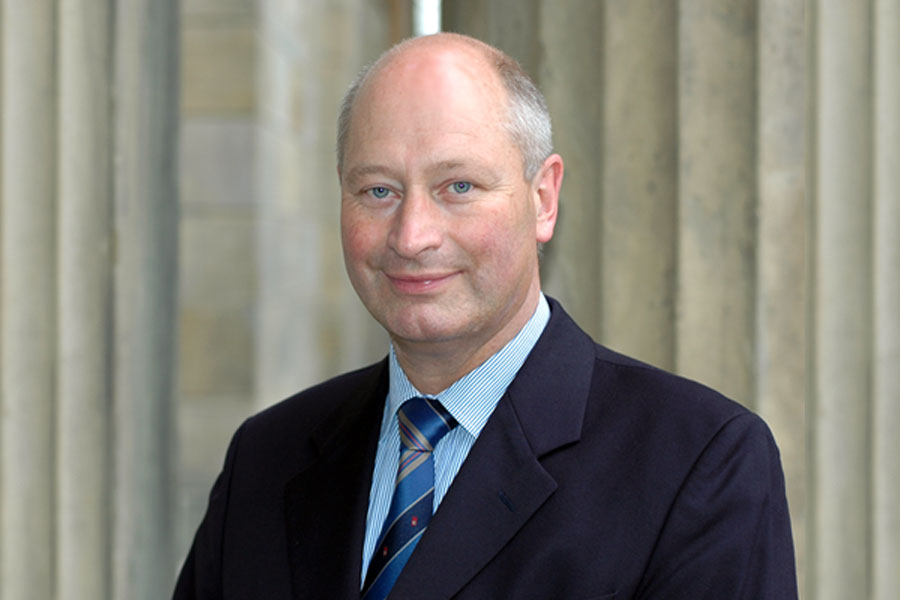 Andreas FriedleinAttorney-at-law✓ UPC representation
Frequently asked questions
Can I sue without a prior request?
No. The request to the patent proprietor is a condition of admissibility. Without it, the action will be dismissed.
Who bears the costs?
The unsuccessful party bears the costs of the successful party up to the ceiling based on the value in dispute.
Does the judgment also apply to future product variants?
Only to the embodiment specifically described. Material changes should be assessed afresh.
Related topics
Deadlines are running – we review your case at short notice
Statement of defence, appeal, protective letter or opt-out: many steps before the Unified Patent Court are subject to strict deadlines. Tell us about your case – confidentially and under attorney-client privilege.
Head office Hanover: 0511 35 73 56-0
info@upc-anwalt.de
10 offices in Germany · advice also by video call
As of November 2026. This information is provided for general guidance only and does not replace legal advice in an individual case. Legal bases: Agreement on a Unified Patent Court (UPCA), Rules of Procedure of the UPC (RoP), Regulations (EU) No 1257/2012 and 1260/2012, German Patent Act, German Utility Model Act, EPC, PCT.