
Your lawyers before the Unified Patent Court
Since 1 June 2023 the Unified Patent Court (UPC) has decided patent disputes with effect for currently 18 EU states. We represent patent proprietors and accused companies in all types of proceedings – from the protective letter to the appeal in Luxembourg.
- Representation before all UPC divisions
- Attorneys-at-law and patent attorneys
- Reply usually within 24 hours
What is the Unified Patent Court?
The Unified Patent Court is a court common to the participating EU Member States. Its legal basis is the Agreement on a Unified Patent Court (UPCA), which entered into force on 1 June 2023. The court has exclusive jurisdiction over Unitary Patents and – during a transitional period, in parallel with the national courts – over classic European patents, unless these have been opted out. It also hears disputes about supplementary protection certificates (SPCs) based on such patents.
The decisive difference from the previous system: a single action can lead to a judgment that applies in all Contracting Member States concerned. Where parties previously had to litigate in parallel in Düsseldorf, Paris, Milan and The Hague, a single set of proceedings is now often sufficient. Conversely, a patent can be revoked for all UPC states at once by a single revocation action – the so-called central attack risk.
The 18 Contracting Member States
The UPCA currently applies in Austria, Belgium, Bulgaria, Denmark, Estonia, Finland, France, Germany, Italy, Latvia, Lithuania, Luxembourg, Malta, the Netherlands, Portugal, Romania (since 1 September 2024), Slovenia and Sweden. Ireland, the Czech Republic, Greece, Hungary, Slovakia and Cyprus have signed but not yet ratified. Spain, Poland and Croatia do not participate; Switzerland and the United Kingdom are outside the system as non-EU states. In those states, national patent protection and national courts remain decisive.
Structure of the court
| Instance | Division | Seat | Mainly responsible for |
|---|---|---|---|
| Court of First Instance | Local divisions | Düsseldorf, Hamburg, Mannheim, Munich, Paris, The Hague, Milan, Vienna and others | Infringement actions, provisional measures, preservation of evidence, counterclaims for revocation |
| Court of First Instance | Nordic-Baltic regional division | Stockholm | as local divisions, for SE, EE, LV, LT |
| Court of First Instance | Central division | Paris, sections in Munich and Milan | stand-alone revocation actions, declarations of non-infringement, actions against EPO decisions |
| Second instance | Court of Appeal | Luxembourg | Appeals against all decisions of the first instance |
| Dispute resolution | Patent Mediation and Arbitration Centre (PMAC) | Ljubljana, Lisbon | Mediation, arbitration, expert determination |
The local divisions sit with three legally qualified judges from at least two states; a technically qualified judge is added on request or of the court’s own motion. The Court of Appeal sits in panels of five with three legally and two technically qualified judges. You can read more about the particularities of each division under Venues.
All types of proceedings before the UPC
We represent you in all proceedings provided for by the UPCA and the Rules of Procedure (RoP):
- Infringement action – injunction, damages, information, recall and destruction for all UPC states concerned (Art. 32(1)(a) UPCA).
- Defending an action – statement of defence within three months, preliminary objection on jurisdiction and language, counterclaim for revocation.
- Revocation action and counterclaim for revocation – central attack on Unitary Patents and European patents.
- Preliminary injunction – provisional measures under Art. 62 UPCA and R. 205 et seq. RoP.
- Protective letter – pre-emptive defence under R. 207 RoP.
- Preservation of evidence – saisie, inspection, freezing of assets.
- Declaration of non-infringement – obtaining certainty that you do not infringe.
- Damages and information – procedure for the determination of damages under R. 125 et seq. RoP.
- Appeals and legal remedies – appeal, review, rehearing.
- Opt-out – taking European patents out of UPC jurisdiction or bringing them back.
- Actions against EPO decisions – for example where the EPO refuses unitary effect (R. 97 RoP).
- SEP and FRAND – standard essential patents and licensing defences.
How proceedings unfold
The UPC is designed for speed. First-instance proceedings are divided into a written procedure (statement of claim, defence, reply, rejoinder), an interim procedure led by the judge-rapporteur with an interim conference, and an oral hearing, which usually takes place on a single day. The aim is a decision about twelve to fifteen months after the action is filed. Because submissions, evidence and requests must be complete at an early stage (“front-loaded”), preparation before filing often determines the outcome. Details can be found under Procedure and deadlines.
Who may represent before the UPC?
Representation is mandatory before the Unified Patent Court. Under Art. 48(1) UPCA, lawyers authorised to practise before a court of a Contracting Member State may represent parties, as may European patent attorneys with an additional qualification under Art. 48(2) UPCA. Our eight UPC representatives – Michael Horak, Julia Ziegeler, Stefan Karfusehr, Robin Jannis Mai, Anna Umberg, Katharina Gitmann-Kopilevich, Karoline Behrend and Andreas Friedlein – are German attorneys-at-law and may act before all divisions. Our patent attorneys assist on technical issues (Art. 48(4) UPCA). More under Representation and language of proceedings.
UPC or national court?
Until at least May 2030, proprietors of classic European patents can in many cases choose whether to sue before the UPC or before national courts. Arguments for the UPC are its cross-border effect, its speed and the increasingly settled case law of the Court of Appeal. The central revocation risk may speak against it – a weak patent is put at risk for 18 states in a single step. Together with you, we assess patent strength, markets, opponents, evidence and budget and recommend the right route. A combination is often sensible: the UPC for core markets, national proceedings in Spain, Poland or the United Kingdom.
Our tip: Review your portfolio now – not only once a dispute arises. Opt-outs, requests for unitary effect and protective letters are subject to deadlines or only take effect if filed before the opponent attacks.
Case examples
Typical situations we encounter in our advisory work – anonymised and simplified.
A machine manufacturer sues once instead of six times
A manufacturer of packaging machines discovers that a competitor is selling a copied sealing station in Germany, France, Italy, the Netherlands, Austria and Belgium. Instead of six national proceedings, we file one infringement action with the Düsseldorf local division. The judgment – injunction, recall and damages on the merits – applies in all six states after around 13 months.
A start-up defends itself against a large corporation
A medical technology start-up is served with an infringement action from Munich. Within the three-month deadline we file a counterclaim for revocation based on an earlier publication found in our search. The claimant has to limit its patent; the start-up’s product no longer infringes the limited version.
A pharmaceutical company protects itself with a protective letter
Before a generic product is launched, we file a protective letter with the UPC setting out the grounds for invalidity of the originator’s patent. When the proprietor applies for a preliminary injunction shortly after launch, the division does not decide without hearing the defendant – the arguments are already on file, and the application is dismissed.
A family business opts its core patents out
A medium-sized valve manufacturer owns 40 European patents. We assess each patent for strength and market relevance. For two basic patents with known weaknesses, we declare an opt-out to avoid the central revocation risk. The remaining patents stay in the UPC system and can be enforced across borders if needed.
An appeal leads to reversal
A local division finds a supplier liable for indirect patent infringement. We file an appeal within two months and submit the grounds within four months. The Court of Appeal in Luxembourg construes the claim more narrowly and dismisses the action. Enforcement had previously been suspended against security.
A licensing dispute ends in mediation
Two companies are in dispute over royalties for a Unitary Patent. After the interim conference, the judge-rapporteur suggests involving the Patent Mediation and Arbitration Centre (PMAC). The parties confidentially agree on a lump-sum licence; the settlement is confirmed by the court and is therefore enforceable.
Your UPC team: authorised to represent before the Unified Patent Court
Michael Horak, Julia Ziegeler, Stefan Karfusehr, Robin Jannis Mai, Anna Umberg, Katharina Gitmann-Kopilevich, Karoline Behrend and Andreas Friedlein are attorneys-at-law admitted in Germany and are therefore entitled under Art. 48(1) UPCA to represent clients before all divisions of the Unified Patent Court and before the Court of Appeal in Luxembourg. Our patent attorneys contribute the technical expertise.
 Dipl.-Ing. Michael Horak, LL.M.Attorney-at-law · Partner · Consulting Engineer✓ UPC representation
 Julia ZiegelerAttorney-at-law · Partner✓ UPC representation
 Stefan KarfusehrAttorney-at-law✓ UPC representation
 Robin Jannis Mai, LL.B.Attorney-at-law✓ UPC representation
 Anna Umberg, LL.M., M.A.Attorney-at-law✓ UPC representation
 Katharina Gitmann-KopilevichAttorney-at-law✓ UPC representation
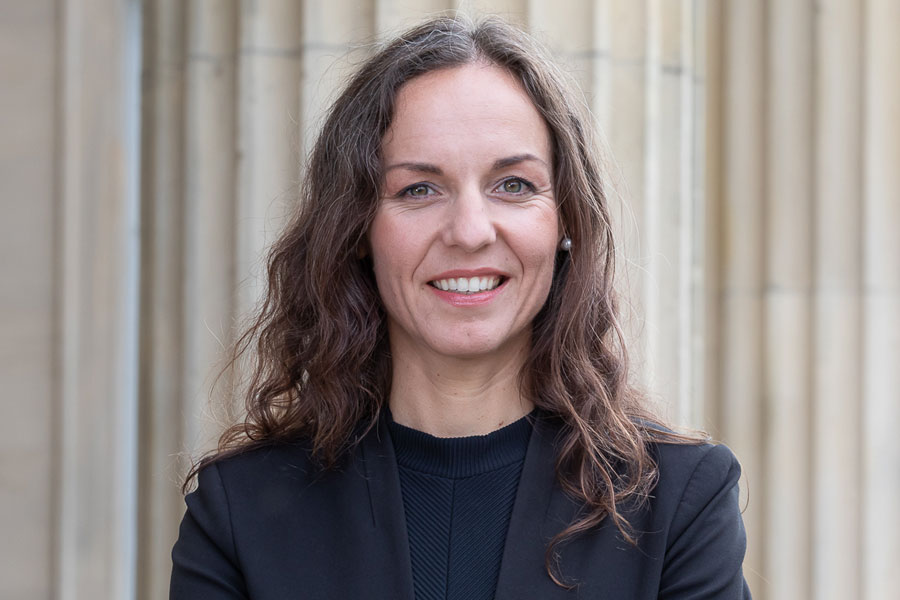 Karoline BehrendAttorney-at-law✓ UPC representation
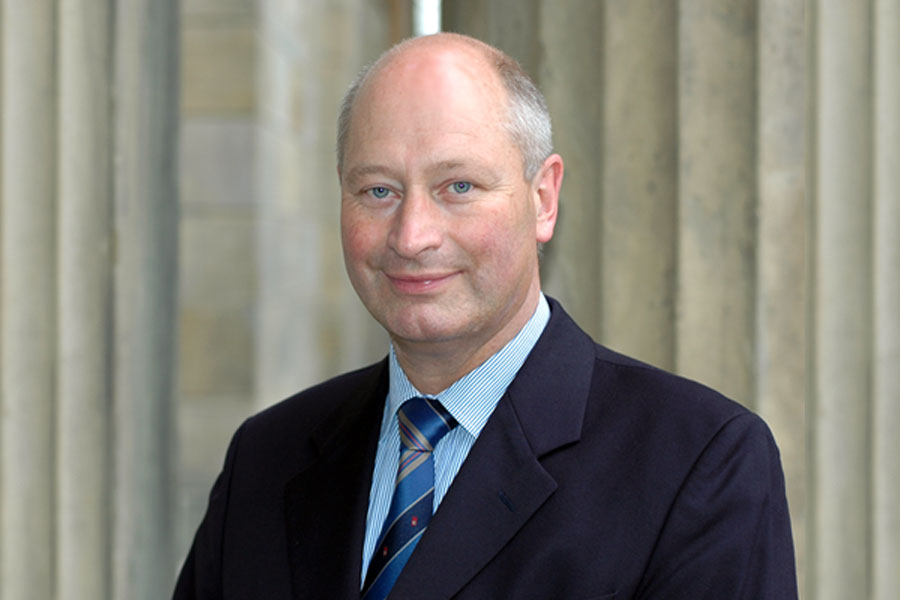 Andreas FriedleinAttorney-at-law✓ UPC representation
Frequently asked questions
Does the UPC have jurisdiction over my German patent?
No. The UPC only has jurisdiction over Unitary Patents, European patents (EP) and SPCs based on them. Purely German patents and utility models continue to be enforced before the German regional courts and challenged before the German Patent and Trade Mark Office or the Federal Patent Court.
How long do proceedings before the UPC take?
Experience shows that a first-instance decision takes about twelve to fifteen months. Provisional measures are ordered within a few weeks, and in urgent cases even without hearing the opponent.
In which language are proceedings conducted?
That depends on the division. The German local divisions hear cases in German or English; the majority of proceedings are now conducted in English. Before the central division, the language of the patent generally applies.
What do UPC proceedings cost?
Since 1 January 2026 the fixed court fee for an infringement action has been EUR 14,600; for higher values in dispute a value-based fee is added. Recoverable legal costs are capped according to the value in dispute. An overview can be found under Costs and fees.
Can I also sue companies outside the EU?
Yes, under certain conditions. According to the case law of the CJEU (BSH v Electrolux, February 2025) and the UPC Court of Appeal, the court may in some circumstances also decide on infringements in non-UPC states, for example if the defendant is domiciled in a UPC state.
Related topics
Deadlines are running – we review your case at short notice
Statement of defence, appeal, protective letter or opt-out: many steps before the Unified Patent Court are subject to strict deadlines. Tell us about your case – confidentially and under attorney-client privilege.
Head office Hanover: 0511 35 73 56-0
info@upc-anwalt.de
10 offices in Germany · advice also by video call
As of November 2026. This information is provided for general guidance only and does not replace legal advice in an individual case. Legal bases: Agreement on a Unified Patent Court (UPCA), Rules of Procedure of the UPC (RoP), Regulations (EU) No 1257/2012 and 1260/2012, German Patent Act, German Utility Model Act, EPC, PCT.