
Course of proceedings and time limits before the UPC
UPC proceedings run to a tight schedule. Those who know the time limits and present their case fully at an early stage have a clear advantage.
- Representation before all UPC divisions
- Attorneys-at-law and patent attorneys
- Reply usually within 24 hours
The three phases at first instance
1. Written procedure. Statement of claim, statement of defence (possibly with a counterclaim for revocation), reply and rejoinder. All facts, evidence and requests should be presented in full here.
2. Interim procedure. The judge-rapporteur prepares the oral hearing, clarifies open points, may appoint experts and holds an interim conference – often by video (R. 101–110 RoP). He or she also explores settlement options and may refer to the PMAC.
3. Oral hearing. In principle it should be concluded within one day (R. 111–119 RoP). The decision is issued in writing, usually a few weeks later.
Time limits in infringement proceedings
| Pleading | Time limit | Provision |
|---|---|---|
| Preliminary objection | 1 month from service of the action | R. 19 RoP |
| Statement of defence, possibly counterclaim for revocation | 3 months from service | R. 23, 25 RoP |
| Reply and defence to the counterclaim, possibly application to amend | 2 months | R. 29(a), R. 30 RoP |
| Rejoinder and reply to the counterclaim | 2 months | R. 29(b) RoP |
| Rejoinder on the counterclaim or rejoinder without counterclaim | 1 month | R. 29(c), (d) RoP |
Time limits in other proceedings
| Proceedings | Time limit | Provision |
|---|---|---|
| Defence to a stand-alone revocation action | 2 months | R. 49 RoP |
| Application to annul a refusal of unitary effect | 3 weeks | R. 97 RoP |
| Action against other EPO decisions | 2 months | R. 88 RoP |
| Main action after provisional measures or saisie | 31 calendar days or 20 working days | R. 198, 213 RoP |
| Review of an ex parte order | 30 days after execution | R. 197, 212 RoP |
| Appeal against final decision | 2 months to lodge, 4 months for grounds | R. 224 RoP |
| Appeal against orders | 15 days | R. 224 RoP |
| Application for a cost decision | 1 month after service of the decision | R. 151 RoP |
| Application for the determination of damages | 1 year after final decision | R. 126 RoP |
| Application to set aside a decision by default | 1 month | R. 356 RoP |
| Rehearing | 2 months from knowledge, max. 10 years | R. 245 RoP |
Calculation of time limits
Time limits begin on the day after the triggering event and end at the close of the day that corresponds by its name or number to the day of the event (R. 300 RoP). If the time limit ends on a Saturday, Sunday or a day on which the Registry is closed, it is extended to the next working day. Pleadings are filed electronically via the CMS; receipt by midnight CET/CEST is decisive.
Front-loading: what it means in practice
The UPC expects the parties to set out their case fully at an early stage. New submissions in later pleadings or on appeal are admitted only exceptionally. For claimants this means: secure evidence, obtain expert opinions, think through auxiliary requests – before filing the action. For defendants it means: start searches and analysis immediately once the action has been served.
Case examples
Typical situations we encounter in our advisory work – anonymised and simplified.
Deadline calendar from day one
On the day an action is served on an electronics manufacturer, we set up a deadline calendar with all pleading deadlines up to the oral hearing. Searches, expert opinions and translations are split into work packages; the statement of defence is filed one week before the deadline.
Interim conference narrows the issues
At the interim conference, the judge-rapporteur asks the parties to limit the disputed claim features to three. We have prepared for this and submit a joint feature list. The oral hearing focuses on the decisive points.
Deadline on a public holiday
The deadline for a reply falls on a day on which the Registry is closed. The deadline is extended to the next working day. We nevertheless file on the original day to avoid any debate about the calculation.
Main action after a saisie
After a successful preservation of evidence, the time limit for the main action runs. Because 20 working days are longer than 31 calendar days due to public holidays, the longer period applies. We nevertheless file the action early.
Don’t forget the cost decision
After winning a case, we apply for a cost decision within one month. The client is reimbursed its lawyers’ and experts’ costs up to the ceiling.
Your UPC team: authorised to represent before the Unified Patent Court
Michael Horak, Julia Ziegeler, Stefan Karfusehr, Robin Jannis Mai, Anna Umberg, Katharina Gitmann-Kopilevich, Karoline Behrend and Andreas Friedlein are attorneys-at-law admitted in Germany and are therefore entitled under Art. 48(1) UPCA to represent clients before all divisions of the Unified Patent Court and before the Court of Appeal in Luxembourg. Our patent attorneys contribute the technical expertise.
 Dipl.-Ing. Michael Horak, LL.M.Attorney-at-law · Partner · Consulting Engineer✓ UPC representation
 Julia ZiegelerAttorney-at-law · Partner✓ UPC representation
 Stefan KarfusehrAttorney-at-law✓ UPC representation
 Robin Jannis Mai, LL.B.Attorney-at-law✓ UPC representation
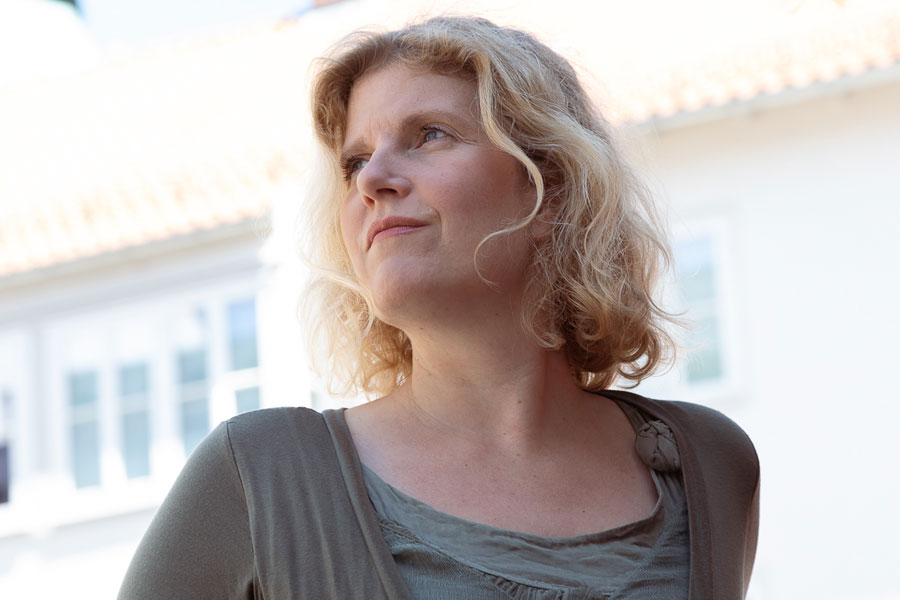 Anna Umberg, LL.M., M.A.Attorney-at-law✓ UPC representation
 Katharina Gitmann-KopilevichAttorney-at-law✓ UPC representation
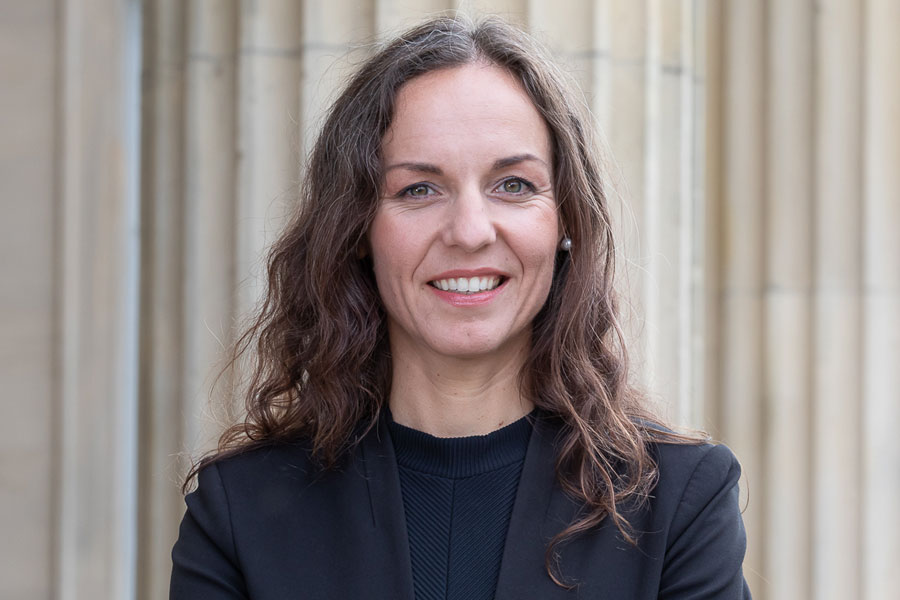 Karoline BehrendAttorney-at-law✓ UPC representation
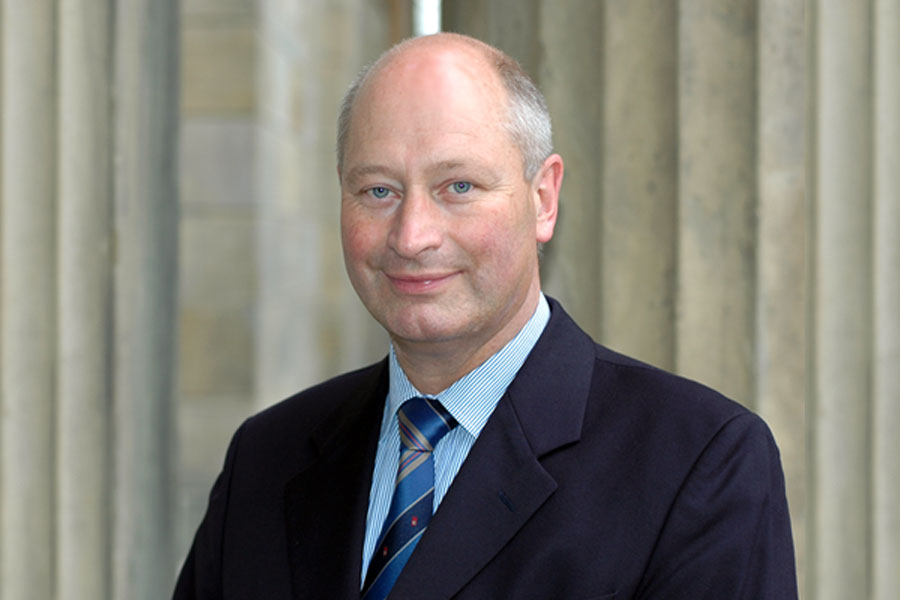 Andreas FriedleinAttorney-at-law✓ UPC representation
Frequently asked questions
Are there court holidays at the UPC?
No, there are no general court holidays. Time limits also run in summer and over Christmas.
Can time limits be extended?
Only exceptionally on a reasoned request (R. 9 RoP). You should not rely on it.
How are pleadings filed?
Electronically via the UPC’s Case Management System (CMS) with a qualified signature.
Related topics
Deadlines are running – we review your case at short notice
Statement of defence, appeal, protective letter or opt-out: many steps before the Unified Patent Court are subject to strict deadlines. Tell us about your case – confidentially and under attorney-client privilege.
Head office Hanover: 0511 35 73 56-0
info@upc-anwalt.de
10 offices in Germany · advice also by video call
As of November 2026. This information is provided for general guidance only and does not replace legal advice in an individual case. Legal bases: Agreement on a Unified Patent Court (UPCA), Rules of Procedure of the UPC (RoP), Regulations (EU) No 1257/2012 and 1260/2012, German Patent Act, German Utility Model Act, EPC, PCT.