
Appeals and remedies before the UPC
Appeals against first-instance decisions are decided by the Court of Appeal in Luxembourg. Time limits are short and the rules on new submissions are strict – an early strategy pays off.
- Representation before all UPC divisions
- Attorneys-at-law and patent attorneys
- Reply usually within 24 hours
Which decisions can be challenged
| Decision | Remedy | Time limit |
|---|---|---|
| Final decision (judgment) | appeal (Art. 73(1) UPCA) | statement of appeal 2 months, grounds 4 months from service (R. 224 RoP) |
| Orders on provisional measures, preservation of evidence, freezing, information, language | appeal (Art. 73(2)(a) UPCA, R. 220(1) RoP) | statement and grounds 15 days |
| Other orders | appeal with leave of the first instance or together with the final decision | request for leave 15 days; request for discretionary review 15 days (R. 220(2), (3) RoP) |
| Cost decision | appeal with leave (R. 221 RoP) | 15 days |
| Orders of the judge-rapporteur | review by the panel (R. 333 RoP) | 15 days |
| Decision by default | application to set aside (R. 356 RoP) | 1 month |
Grounds and new submissions
An appeal may be based on points of law and matters of fact (Art. 73(3) UPCA). However, new facts and evidence are admitted only to a limited extent: they must not have been capable of being submitted at first instance, or there must be good reasons for admitting them (Art. 73(4) UPCA, R. 222 RoP). The Court of Appeal applies this rule strictly. Anyone who holds back prior art or auxiliary requests at first instance often cannot introduce them on appeal.
Suspensive effect
As a rule, an appeal has no suspensive effect (Art. 74(1) UPCA). An injunction can therefore be enforced immediately. On request, the Court of Appeal may suspend enforcement; this requires special circumstances, such as an obvious error at first instance. By contrast, appeals against decisions on revocation actions and counterclaims and on actions against EPO decisions always have suspensive effect (Art. 74(2) UPCA).
Procedure before the Court of Appeal
After the statement of grounds, the respondent has three months for its response, 15 days in appeals against orders (R. 235, 236 RoP). It may lodge a cross-appeal (R. 237 RoP). The Court of Appeal sits in panels of five, with three legally qualified and two technically qualified judges. Since 2026 it has operated with three panels. It can decide the case itself or, exceptionally, refer it back to the first instance (Art. 75 UPCA).
Rehearing
After a final decision, a rehearing is possible only in narrow exceptional cases (Art. 81 UPCA, R. 245 et seq. RoP): where a fact is discovered that would have been decisive and was unknown to the applicant, or in the event of a fundamental procedural defect, in particular where a criminal offence influenced the decision. The application must be filed within two months of discovery of the new fact and no later than ten years after the decision. Since 2026 the fee for this has been significantly higher.
Reference to the CJEU
Where proceedings raise questions of EU law, the UPC may – and as the court of last instance must – refer them to the Court of Justice of the European Union (Art. 21 UPCA). In 2026 the Court of Appeal referred questions for the first time on the scope of its jurisdiction over defendants from third countries.
Case examples
Typical situations we encounter in our advisory work – anonymised and simplified.
Appeal against an injunction with an application for suspension
A supplier is ordered to cease and desist although the division clearly misconstrued a claim feature. We appeal and apply for suspension of enforcement. The Court of Appeal suspends enforcement against security and later dismisses the action.
15-day time limit in urgent proceedings
Against a provisional order prohibiting the sale of a mobile device, we lodge an appeal with full grounds within 15 days. The Court of Appeal sets the order aside because of doubts as to validity.
New document not admitted
After the first-instance judgment, a client finds a further prior publication. Because it was publicly available and could have been found with reasonable effort, the Court of Appeal does not admit it. Since then we have searched even more thoroughly before the statement of defence.
Cross-appeal by the patent proprietor
The defendant challenges the finding of infringement. On behalf of the proprietor, we lodge a cross-appeal because the first instance had refused the recall claim. The Court of Appeal confirms infringement and additionally orders a recall.
Rehearing after deception
After proceedings have ended, it emerges that the opponent’s test reports had been manipulated. We apply for a rehearing within two months of learning of this. The Court of Appeal sets the decision aside and orders a new hearing.
Your UPC team: authorised to represent before the Unified Patent Court
Michael Horak, Julia Ziegeler, Stefan Karfusehr, Robin Jannis Mai, Anna Umberg, Katharina Gitmann-Kopilevich, Karoline Behrend and Andreas Friedlein are attorneys-at-law admitted in Germany and are therefore entitled under Art. 48(1) UPCA to represent clients before all divisions of the Unified Patent Court and before the Court of Appeal in Luxembourg. Our patent attorneys contribute the technical expertise.
 Dipl.-Ing. Michael Horak, LL.M.Attorney-at-law · Partner · Consulting Engineer✓ UPC representation
 Julia ZiegelerAttorney-at-law · Partner✓ UPC representation
 Stefan KarfusehrAttorney-at-law✓ UPC representation
 Robin Jannis Mai, LL.B.Attorney-at-law✓ UPC representation
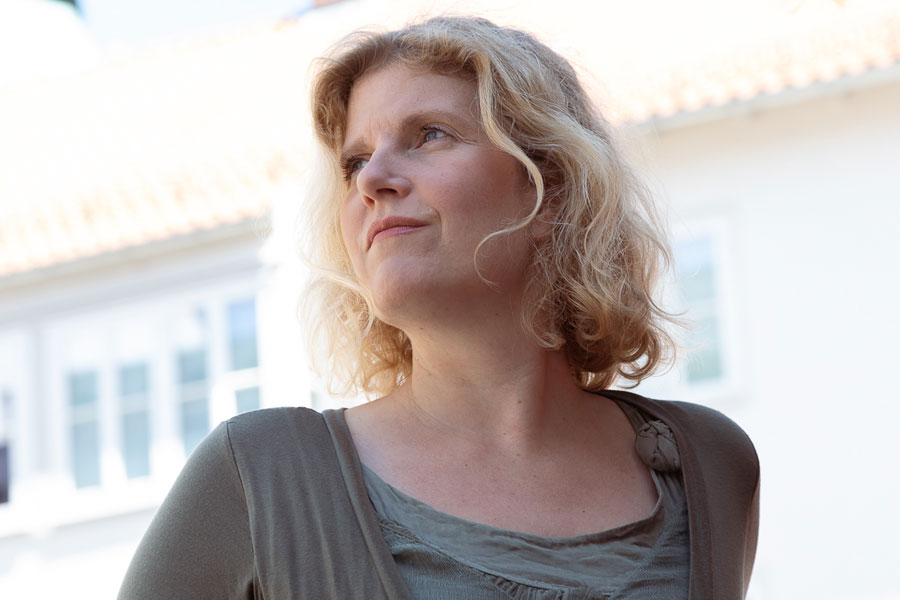 Anna Umberg, LL.M., M.A.Attorney-at-law✓ UPC representation
 Katharina Gitmann-KopilevichAttorney-at-law✓ UPC representation
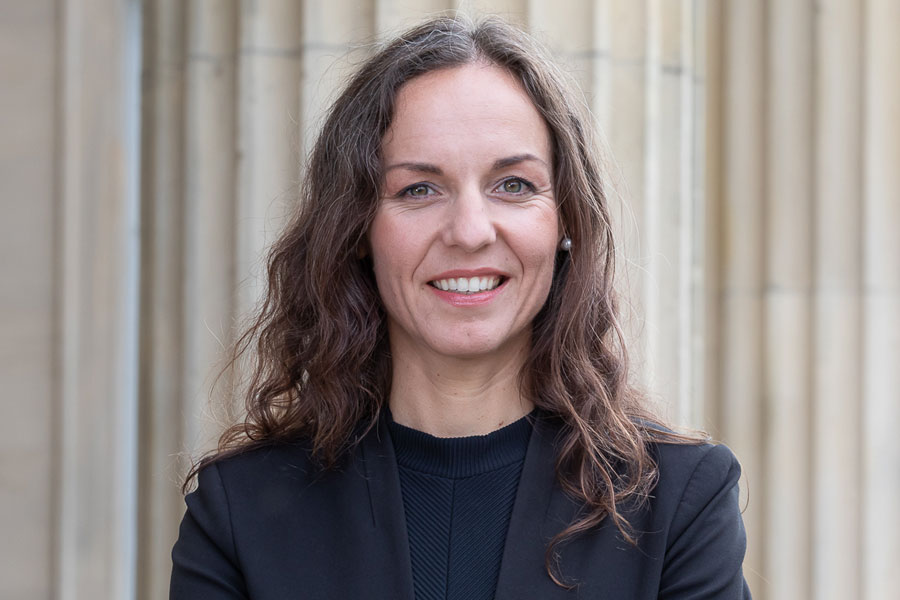 Karoline BehrendAttorney-at-law✓ UPC representation
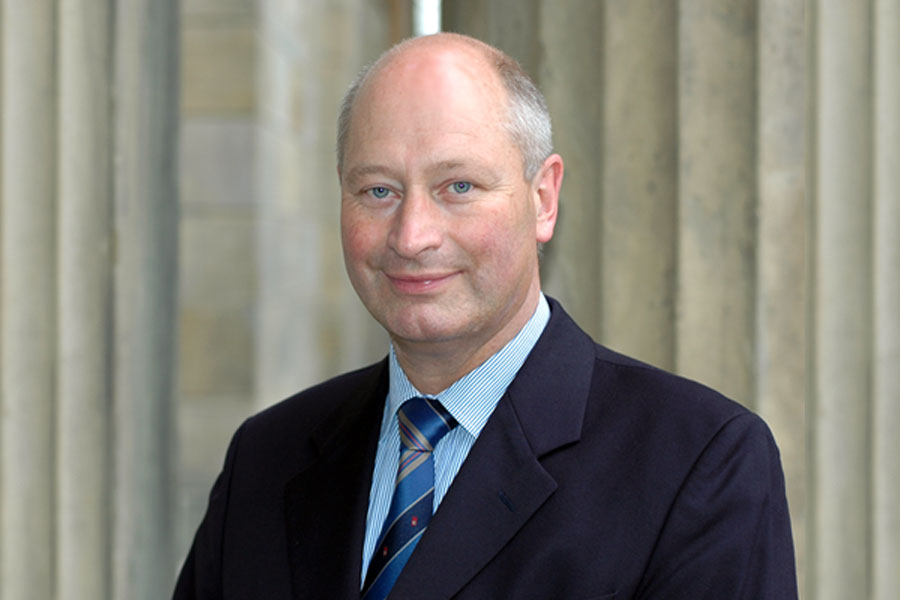 Andreas FriedleinAttorney-at-law✓ UPC representation
Frequently asked questions
Is there a third instance after the Court of Appeal?
No. The Court of Appeal decides at last instance. Only a rehearing is possible in exceptional cases.
How long does an appeal take?
Experience shows around one year for final decisions; appeals against orders in urgent matters are much faster, often within a few months.
Which language applies on appeal?
In principle the language of proceedings at first instance. The parties may agree on the language of the patent (Art. 50 UPCA).
Have appeal fees increased?
Yes. Since 1 January 2026 the fixed fees have risen by around a third, and the value-based fees on appeal by an additional 10%.
Related topics
Deadlines are running – we review your case at short notice
Statement of defence, appeal, protective letter or opt-out: many steps before the Unified Patent Court are subject to strict deadlines. Tell us about your case – confidentially and under attorney-client privilege.
Head office Hanover: 0511 35 73 56-0
info@upc-anwalt.de
10 offices in Germany · advice also by video call
As of November 2026. This information is provided for general guidance only and does not replace legal advice in an individual case. Legal bases: Agreement on a Unified Patent Court (UPCA), Rules of Procedure of the UPC (RoP), Regulations (EU) No 1257/2012 and 1260/2012, German Patent Act, German Utility Model Act, EPC, PCT.