
Opt-out from the Unified Patent Court
During the transitional period, proprietors of classic European patents can exclude the jurisdiction of the UPC. This protects against central revocation attacks – but at the price of cross-border enforcement.
- Representation before all UPC divisions
- Attorneys-at-law and patent attorneys
- Reply usually within 24 hours
What the opt-out does
During a transitional period of seven years from 1 June 2023, classic European patents are subject both to the jurisdiction of the UPC and to that of national courts (Art. 83(1) UPCA). With an opt-out under Art. 83(3) UPCA and R. 5 RoP, the proprietor excludes the UPC’s jurisdiction for the patent and any supplementary protection certificates based on it. Neither the proprietor nor third parties can then bring actions before the UPC – including revocation actions. An opt-out is not possible for unitary patents.
Deadlines and timing
The transitional period runs until 31 May 2030 and may be extended by up to seven further years. An opt-out is possible until one month before the end of the transitional period at the latest. However, it is only effective if no action has yet been brought before the UPC concerning the patent. Anyone who reacts only once a competitor has filed a revocation action is too late. The opt-out applies for the entire life of the patent, even beyond the end of the transitional period.
Withdrawal of the opt-out
The opt-out can be withdrawn once (Art. 83(4) UPCA). After that, no new opt-out is possible. Withdrawal is excluded if proceedings are already pending before a national court. Patent proprietors use withdrawal strategically in order to sue before the UPC after all in a specific infringement case.
Who must declare the opt-out?
The opt-out must be declared by all proprietors of the European patent for all states in which it is validated. Particular care is needed with co-owners, different proprietors in different countries or after assignments: an opt-out not declared by all registered proprietors is ineffective. The declaration is made via the UPC’s CMS and incurs no official fee. An application can also be opted out before grant.
Decision guide
| Opt-out tends to make sense | Staying in the UPC system tends to make sense |
|---|---|
| core patent with known vulnerabilities | robust patent examined several times |
| value concentrated in one or two states | infringers in many UPC states |
| licence agreements provide for national courts | fast, uniform enforcement desired |
| pharma: compound patent on which SPCs depend | platform technology with many imitators |
| unclear ownership to be clarified first | competitors use the UPC offensively themselves |
The decision must be taken for each patent individually. We assess your portfolio and document the reasons – including for investors and licensees.
Case examples
Typical situations we encounter in our advisory work – anonymised and simplified.
Pharma protects its compound patent
A mid-sized pharmaceutical company opts out its compound patent together with the SPC. A generic manufacturer therefore cannot attack the patent in one stroke for all UPC states but has to proceed in each state separately.
Withdrawal for a specific action
In 2023 a machine builder opted out all its patents as a precaution. In 2026 a competitor infringes one patent in nine UPC states. We withdraw the opt-out for this patent and sue immediately afterwards before the Munich Local Division.
Ineffective opt-out due to co-ownership
During a portfolio review we find that, after a joint venture, a patent has two proprietors, but the opt-out was declared by only one. We have it declared again by both proprietors before a third party can bring an action.
Portfolio assessment before a funding round
A start-up with 15 European patent applications is preparing a Series B round. We draw up an opt-out strategy with reasons for each family. The investors include it in the due diligence documents.
Too late after a revocation action
A patent proprietor wants to opt out its patent after a competitor has filed a revocation action at the Central Division. The opt-out is no longer possible. We concentrate on the defence with auxiliary requests – and opt out the other vulnerable patents as a precaution.
Your UPC team: authorised to represent before the Unified Patent Court
Michael Horak, Julia Ziegeler, Stefan Karfusehr, Robin Jannis Mai, Anna Umberg, Katharina Gitmann-Kopilevich, Karoline Behrend and Andreas Friedlein are attorneys-at-law admitted in Germany and are therefore entitled under Art. 48(1) UPCA to represent clients before all divisions of the Unified Patent Court and before the Court of Appeal in Luxembourg. Our patent attorneys contribute the technical expertise.
 Dipl.-Ing. Michael Horak, LL.M.Attorney-at-law · Partner · Consulting Engineer✓ UPC representation
 Julia ZiegelerAttorney-at-law · Partner✓ UPC representation
 Stefan KarfusehrAttorney-at-law✓ UPC representation
 Robin Jannis Mai, LL.B.Attorney-at-law✓ UPC representation
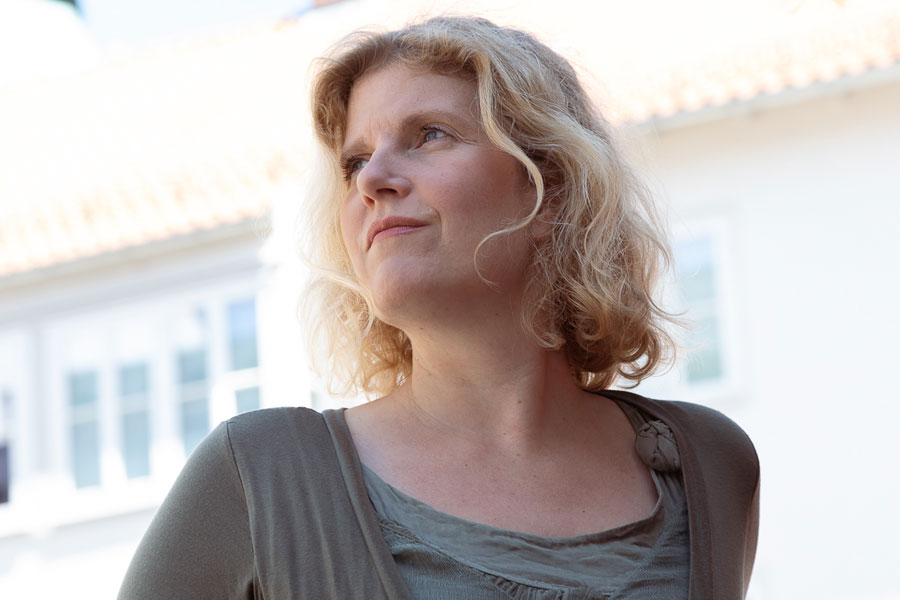 Anna Umberg, LL.M., M.A.Attorney-at-law✓ UPC representation
 Katharina Gitmann-KopilevichAttorney-at-law✓ UPC representation
 Karoline BehrendAttorney-at-law✓ UPC representation
 Andreas FriedleinAttorney-at-law✓ UPC representation
Frequently asked questions
Does the opt-out cost anything?
The UPC charges no fee. Only our costs for review and filing are incurred.
Can I opt out a unitary patent?
No. Unitary patents are subject exclusively to the jurisdiction of the UPC.
What happens after the transitional period ends?
Patents effectively opted out remain opted out for their entire life. For all other European patents, the UPC then has exclusive jurisdiction.
Do I have to declare the opt-out for each country separately?
No, it applies to all UPC states in which the patent is validated. However, it must be declared by all proprietors.
Related topics
Deadlines are running – we review your case at short notice
Statement of defence, appeal, protective letter or opt-out: many steps before the Unified Patent Court are subject to strict deadlines. Tell us about your case – confidentially and under attorney-client privilege.
Head office Hanover: 0511 35 73 56-0
info@upc-anwalt.de
10 offices in Germany · advice also by video call
As of November 2026. This information is provided for general guidance only and does not replace legal advice in an individual case. Legal bases: Agreement on a Unified Patent Court (UPCA), Rules of Procedure of the UPC (RoP), Regulations (EU) No 1257/2012 and 1260/2012, German Patent Act, German Utility Model Act, EPC, PCT.