
The unitary patent
With a single request to the EPO, your European patent becomes one right for 18 EU states – with central renewal fees and no national validations. We check whether this pays off for you and file the request on time.
- Representation before all UPC divisions
- Attorneys-at-law and patent attorneys
- Reply usually within 24 hours
What is a unitary patent?
The unitary patent (European patent with unitary effect) is based on EU Regulations 1257/2012 and 1260/2012 and has been available since 1 June 2023. It does not arise from a separate application but from a European patent granted by the EPO: after grant, the proprietor requests unitary effect. The patent then counts as a single right in all participating EU states that had ratified the UPCA at the time of registration – currently 18 states. It can only be transferred, limited, revoked or lapse as a whole.
Request for unitary effect
| Item | Rule |
|---|---|
| Time limit | 1 month after publication of the mention of grant in the European Patent Bulletin (cannot be extended) |
| Office | European Patent Office |
| Language | language of proceedings of the patent |
| Translation | for German or French: full translation into English; for English: into another official EU language |
| Fee | no request fee |
| Requirement | same claims for all 18 participating states |
The translation requirement applies during a transitional period and is for information only; the language of proceedings remains legally authoritative. Applicants based in the EU whose application was filed in a non-EPO official language can receive compensation for translation costs as an SME, university or research institution.
Renewal fees
Instead of fees in each country, you pay a single renewal fee to the EPO. The amount roughly equals the sum of the fees in the four states in which European patents were most frequently validated in the past. Filing a statement of willingness to license reduces renewal fees by 15%. From about four states upwards, the unitary patent is usually cheaper in renewal fees than individual validations; in addition, translation and representative costs in the validation states are saved.
Unitary patent or classic validation?
| Criterion | Unitary patent | Classic validation |
|---|---|---|
| Territory | 18 UPC states in one go | only selected states |
| Costs for many states | cheaper | more expensive |
| Costs for 1–3 states | often more expensive | cheaper |
| Court | exclusively UPC | UPC and national (opt-out possible) |
| Dropping individual states | not possible | states can be abandoned individually |
| Risk of attack | central revocation action for all 18 states | opt-out protects against central attack |
For states outside the system – such as Spain, Poland, the United Kingdom, Switzerland or Turkey – classic validation remains necessary. A combination often makes sense: unitary patent for the UPC states plus national validations in the other important markets.
Points to note
- Frozen territorial scope: the unitary patent applies only to the states participating at the time of registration. If a state joins later (such as Romania in 2024), older unitary patents do not cover it.
- All states must be designated: according to the Court of Appeal decision of February 2026, unitary effect is excluded if the patent was not granted for all participating states – for example for divisional applications from parent applications filed before Malta acceded to the EPC in 2007.
- No opt-out: unitary patents are subject exclusively to the UPC.
- German patent in parallel: since 1 June 2023, parallel protection by a German patent and a European or unitary patent for the same subject matter has been permitted – a way of hedging against the risk of central attack.
Case examples
Typical situations we encounter in our advisory work – anonymised and simplified.
Exporter in ten EU states
A manufacturer of laboratory furniture sells in ten UPC states. Instead of ten validations, we request unitary effect and additionally validate in Spain, Poland and Switzerland. Over the patent’s life, the client saves a five-figure sum.
Only Germany and France relevant
An aerospace supplier sells to just two customers in Germany and France. We advise classic validation in these two states and declare the opt-out. This is cheaper and avoids the risk of central revocation.
Safety net with a German patent
A manufacturer of battery management systems holds a German patent and a unitary patent for the same invention in parallel. When a competitor obtains revocation of the unitary patent before the UPC, the German patent survives and can be enforced before the regional court.
SME receives translation compensation
A start-up from Italy filed its application in Italian. When requesting unitary effect, we apply for compensation for translation costs. The EPO grants the lump sum.
Willingness to license lowers costs
A university wants to license its patents as widely as possible. We file the statement of willingness to license for the unitary patent; renewal fees fall by 15%, and interested parties know they can obtain a licence.
Deadline narrowly missed
A client contacts us only five weeks after the mention of grant. The one-month time limit for unitary effect has expired. We secure protection through classic validations, whose time limits are still running.
Your UPC team: authorised to represent before the Unified Patent Court
Michael Horak, Julia Ziegeler, Stefan Karfusehr, Robin Jannis Mai, Anna Umberg, Katharina Gitmann-Kopilevich, Karoline Behrend and Andreas Friedlein are attorneys-at-law admitted in Germany and are therefore entitled under Art. 48(1) UPCA to represent clients before all divisions of the Unified Patent Court and before the Court of Appeal in Luxembourg. Our patent attorneys contribute the technical expertise.
 Dipl.-Ing. Michael Horak, LL.M.Attorney-at-law · Partner · Consulting Engineer✓ UPC representation
 Julia ZiegelerAttorney-at-law · Partner✓ UPC representation
 Stefan KarfusehrAttorney-at-law✓ UPC representation
 Robin Jannis Mai, LL.B.Attorney-at-law✓ UPC representation
 Anna Umberg, LL.M., M.A.Attorney-at-law✓ UPC representation
 Katharina Gitmann-KopilevichAttorney-at-law✓ UPC representation
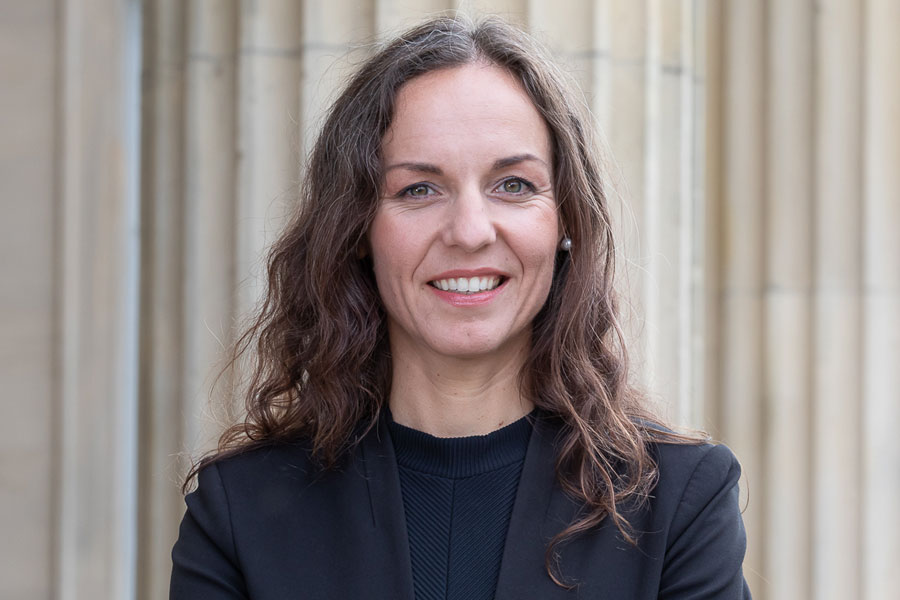 Karoline BehrendAttorney-at-law✓ UPC representation
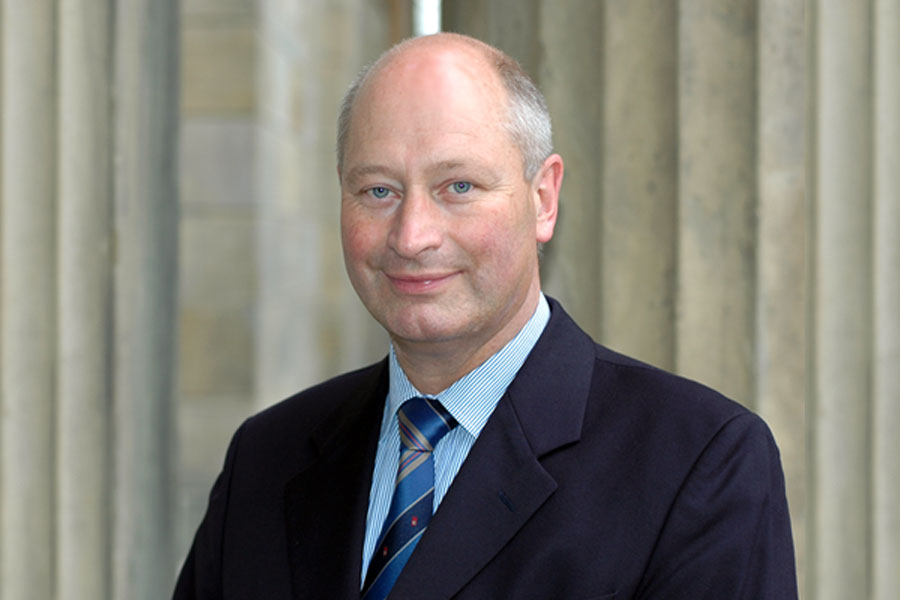 Andreas FriedleinAttorney-at-law✓ UPC representation
Frequently asked questions
How long do I have to file the request?
One month from publication of the mention of grant in the European Patent Bulletin. The time limit cannot be extended; re-establishment of rights is possible only exceptionally.
Can I apply for a unitary patent directly?
No. You file a European patent application with the EPO. After grant, you request unitary effect. We support you through both steps.
Does the unitary patent also apply in Spain or Switzerland?
No. Classic validation of the European patent is still required for those countries.
What does the request cost?
The EPO charges no request fee. Translation costs and our fees are incurred. From grant, you pay the central renewal fees.
Related topics
Deadlines are running – we review your case at short notice
Statement of defence, appeal, protective letter or opt-out: many steps before the Unified Patent Court are subject to strict deadlines. Tell us about your case – confidentially and under attorney-client privilege.
Head office Hanover: 0511 35 73 56-0
info@upc-anwalt.de
10 offices in Germany · advice also by video call
As of November 2026. This information is provided for general guidance only and does not replace legal advice in an individual case. Legal bases: Agreement on a Unified Patent Court (UPCA), Rules of Procedure of the UPC (RoP), Regulations (EU) No 1257/2012 and 1260/2012, German Patent Act, German Utility Model Act, EPC, PCT.