
PMAC: mediation and arbitration at the UPC
The Patent Mediation and Arbitration Centre (PMAC) is the Unified Patent Court’s own dispute resolution centre. It has offered mediation since May 2026 and was officially opened on 2 June 2026.
- Representation before all UPC divisions
- Attorneys-at-law and patent attorneys
- Reply usually within 24 hours
What the PMAC is
The PMAC is based on Art. 35 UPCA and is institutionally integrated into the UPC. The rules for arbitration, mediation and expert determination (PMAC Rules) were adopted by the UPC Administrative Committee and entered into force on 24 April 2026. Mediations have been possible since 12 May 2026; the formal opening took place on 2 June 2026 in Ljubljana. Arbitration and expert determination are becoming available step by step in the course of 2026.
Services
- Mediation: structured negotiation with a neutral mediator; the aim is an amicable solution.
- Arbitration: binding decision by an arbitral tribunal, enforceable internationally.
- Expert determination: clarification of specific technical or economic questions by an expert.
- Med-arb: mediation followed by arbitration if no agreement is reached.
The PMAC keeps lists of mediators, arbitrators and experts from UPC and non-UPC states. The official languages are English, French and German; the parties can agree on another language.
Jurisdiction
The PMAC is competent for disputes concerning European patents within the UPC’s jurisdiction, unitary patents and supplementary protection certificates based on them, as well as related disputes, for example under licence agreements. Its activity is not geographically limited to the UPC states. The PMAC cannot revoke or amend a patent with effect against everyone; the parties can, however, agree to limit a patent, surrender it or not assert it.
Connection to court proceedings
The judge-rapporteur in UPC proceedings is to draw the parties’ attention to settlement options and can suggest mediation at the PMAC (R. 11, R. 104 RoP). A settlement reached before the PMAC can be confirmed by the court and is then enforceable like a court decision (Art. 79 UPCA, R. 11(2) RoP). The PMAC Rules provide for comprehensive confidentiality; awards can be published in anonymised form if no party objects.
Who the PMAC suits
FRAND disputes in which confidential comparable licences play a role, licence disputes between partners, companies wishing to avoid public litigation and proceedings in which a single technical question is decisive.
Case examples
Typical situations we encounter in our advisory work – anonymised and simplified.
FRAND rate negotiated confidentially
A manufacturer of IoT modules and a patent holder dispute the royalty rate for an LTE portfolio. They agree on mediation at the PMAC with a mediator experienced in licence valuation. The comparable licences remain confidential; after three months an agreement is reached.
Mediation suggested by the court
In infringement proceedings before the Düsseldorf Local Division, the judge-rapporteur refers to the PMAC at the interim conference. The parties stay the proceedings and agree on a cross-licence in mediation.
Arbitration clause in a licence agreement
When renegotiating a licence agreement for a unitary patent, we include a PMAC arbitration clause. Disputes over royalties will in future be decided confidentially and by patent experts.
Expert determination on infringement
Two companies agree on everything except whether a product generation falls under a patent. They commission an expert determination at the PMAC. They base their licence accounting on the result.
University and spin-off
A university and its spin-off dispute rights to further developments. Mediation at the PMAC clarifies the legal position without damaging the relationship; the outcome is recorded in a new licence agreement.
Your UPC team: authorised to represent before the Unified Patent Court
Michael Horak, Julia Ziegeler, Stefan Karfusehr, Robin Jannis Mai, Anna Umberg, Katharina Gitmann-Kopilevich, Karoline Behrend and Andreas Friedlein are attorneys-at-law admitted in Germany and are therefore entitled under Art. 48(1) UPCA to represent clients before all divisions of the Unified Patent Court and before the Court of Appeal in Luxembourg. Our patent attorneys contribute the technical expertise.
 Dipl.-Ing. Michael Horak, LL.M.Attorney-at-law · Partner · Consulting Engineer✓ UPC representation
 Julia ZiegelerAttorney-at-law · Partner✓ UPC representation
 Stefan KarfusehrAttorney-at-law✓ UPC representation
 Robin Jannis Mai, LL.B.Attorney-at-law✓ UPC representation
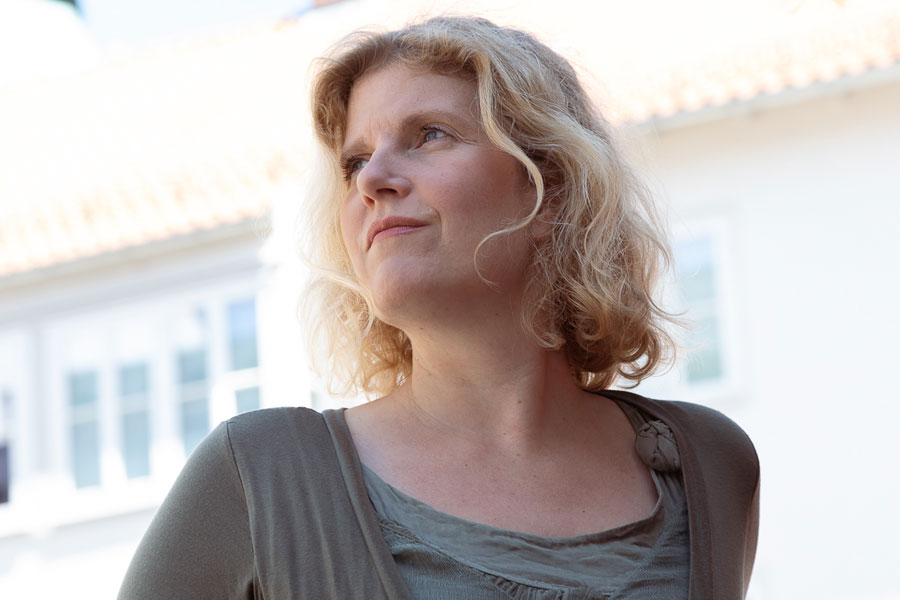 Anna Umberg, LL.M., M.A.Attorney-at-law✓ UPC representation
 Katharina Gitmann-KopilevichAttorney-at-law✓ UPC representation
 Karoline BehrendAttorney-at-law✓ UPC representation
 Andreas FriedleinAttorney-at-law✓ UPC representation
Frequently asked questions
Is an agreement reached at the PMAC enforceable?
Yes. A settlement in pending UPC proceedings can be confirmed by the court and is then enforceable. Arbitral awards are internationally enforceable under the New York Convention.
Does the patent have to be in the UPC system?
The PMAC is competent for patents within the UPC’s jurisdiction and related disputes. For opted-out patents, we examine case by case whether there is a connection or whether another arbitral institution is more suitable.
How long does mediation at the PMAC take?
Often only a few months. The rules provide that the PMAC can terminate proceedings after twelve months if no agreement is in sight.
Related topics
Deadlines are running – we review your case at short notice
Statement of defence, appeal, protective letter or opt-out: many steps before the Unified Patent Court are subject to strict deadlines. Tell us about your case – confidentially and under attorney-client privilege.
Head office Hanover: 0511 35 73 56-0
info@upc-anwalt.de
10 offices in Germany · advice also by video call
As of November 2026. This information is provided for general guidance only and does not replace legal advice in an individual case. Legal bases: Agreement on a Unified Patent Court (UPCA), Rules of Procedure of the UPC (RoP), Regulations (EU) No 1257/2012 and 1260/2012, German Patent Act, German Utility Model Act, EPC, PCT.